Models and credit
Which model to choose, how cost is calculated, buying credit, and what happens when credit runs out mid-task.
Which model?
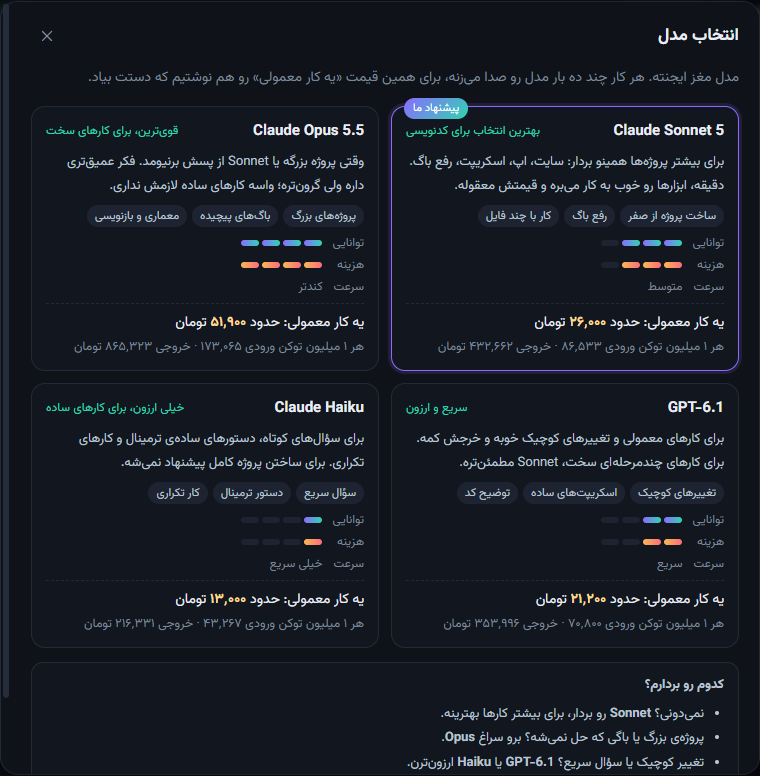
The model is the agent’s brain. Change it any time from the top bar; each chat keeps its own model.
- Not sure? Pick Claude Sonnet 5 — best for most work.
- Large project or a bug that won’t die? Use Opus 5.5.
- Small change or quick question? GPT-6.1 or Haiku are cheaper.
How is cost calculated?
Harnes Code credit is in toman. Each time the agent talks to the model, the tokens actually used are deducted from your wallet — no subscription, no fixed fee. A “typical task” in the table above is about 250k input and 10k output tokens, e.g. building a simple site or fixing a bug.
To spend less:
- Start a new chat for each new job; a long chat has to be re-read every step.
- Use a cheaper model for simple work.
- Be precise so the agent spends less time searching.
Buying credit
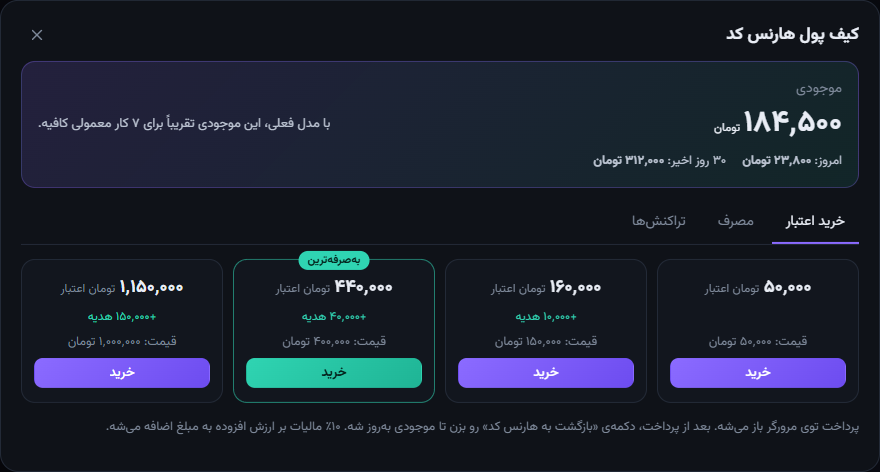
Buy a pack from the Credit card at the bottom of the Windows app, or the Wallet tab on your phone. Payment happens in the browser and the balance updates automatically. Bigger packs include bonus credit.
If credit runs out mid-task
Nothing is lost — the task just pauses. Buy a pack and press I bought credit, continue (works from the phone too) and the agent resumes from the exact step where it stopped.
The Usage and Transactions tabs show what you spent per day and per model.